
BLOGS
The #1 Payroll Error We See in Ontario Businesses
Payroll mistakes are more common than most business owners realize. One issue consistently creates the biggest problems for Ontario businesses: misclassifying workers as independent contractors instead of employees.
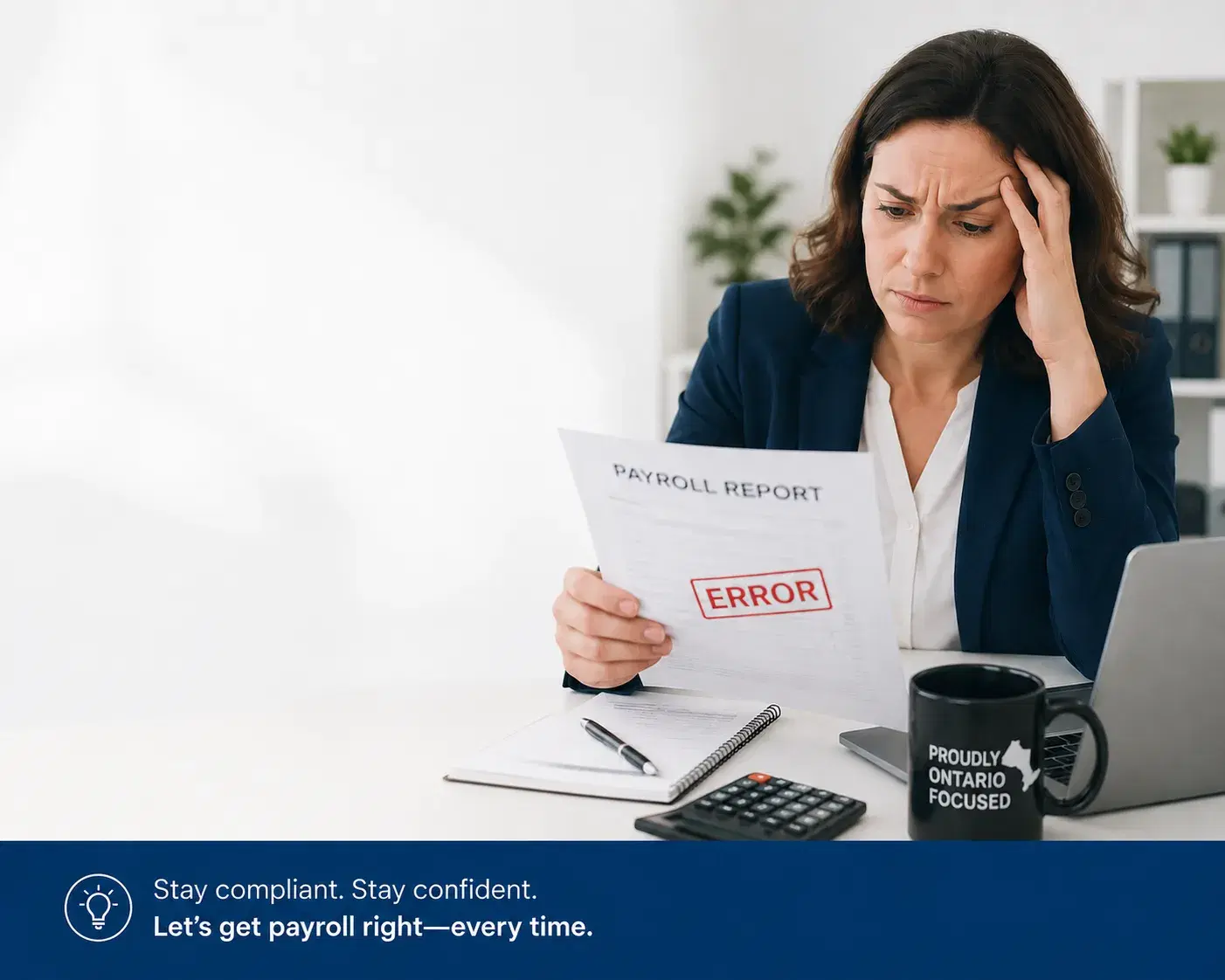
Misclassifying Workers as Independent Contractors Instead of Employees
At first glance, hiring contractors may seem simpler and less expensive. But many businesses unintentionally classify workers incorrectly, which can trigger serious consequences with the CRA and Ontario labour authorities.
Simply calling someone a contractor in an agreement does not automatically make them one in the eyes of the CRA. The actual working relationship matters.
Why This Matters
When a worker should legally be treated as an employee, the employer may be responsible for:
- CPP contributions
- EI premiums
- Income tax deductions
- Vacation pay
- Statutory holiday pay
- WSIB obligations
- Overtime requirements
The Cost Can Build Quickly
If the CRA determines a worker was misclassified, businesses can face unexpected costs that become significant very quickly, especially for growing SMBs.
Retroactive payroll taxes
Interest and penalties
Payroll audits
Compliance reviews
Common Signs of Misclassification
A worker may actually be considered an employee if the business relationship looks and operates like employment in practice.
- -They work primarily for one company
- -The business controls their schedule and duties
- -They use company equipment or systems
- -They are integrated into daily operations
- -They are paid consistently like staff members
Why Ontario SMBs Are Especially Vulnerable
Many small and mid-sized businesses grow quickly and hire informally in the early stages. Payroll structures often develop without proper review.
We commonly see this issue in industries such as:
In many cases, the mistake is unintentional, but the financial impact can still be severe.
How Businesses Can Protect Themselves
Payroll compliance is not just an administrative task. It is a critical part of protecting your business from tax exposure, penalties, and avoidable audit pressure.
Step 1
Review Worker Relationships Regularly
As businesses grow, contractor arrangements may gradually begin functioning like employment relationships.
Step 2
Maintain Proper Payroll Records
Accurate payroll documentation is critical during CRA reviews or audits.
Step 3
Use Written Agreements
Contracts should clearly outline responsibilities, independence, payment structure, and scope of work.
Step 4
Seek Professional Guidance Early
A proactive payroll review is far less expensive than correcting years of payroll issues later.
Final Thoughts
The #1 payroll error we see in Ontario businesses is not always caused by negligence. More often, it comes from rapid growth, lack of clarity, or outdated processes.
With proper bookkeeping and payroll systems in place, most payroll problems can be prevented before they become costly.
Need help reviewing your payroll processes? A professional payroll assessment can identify risks early and help keep your business compliant and audit-ready.